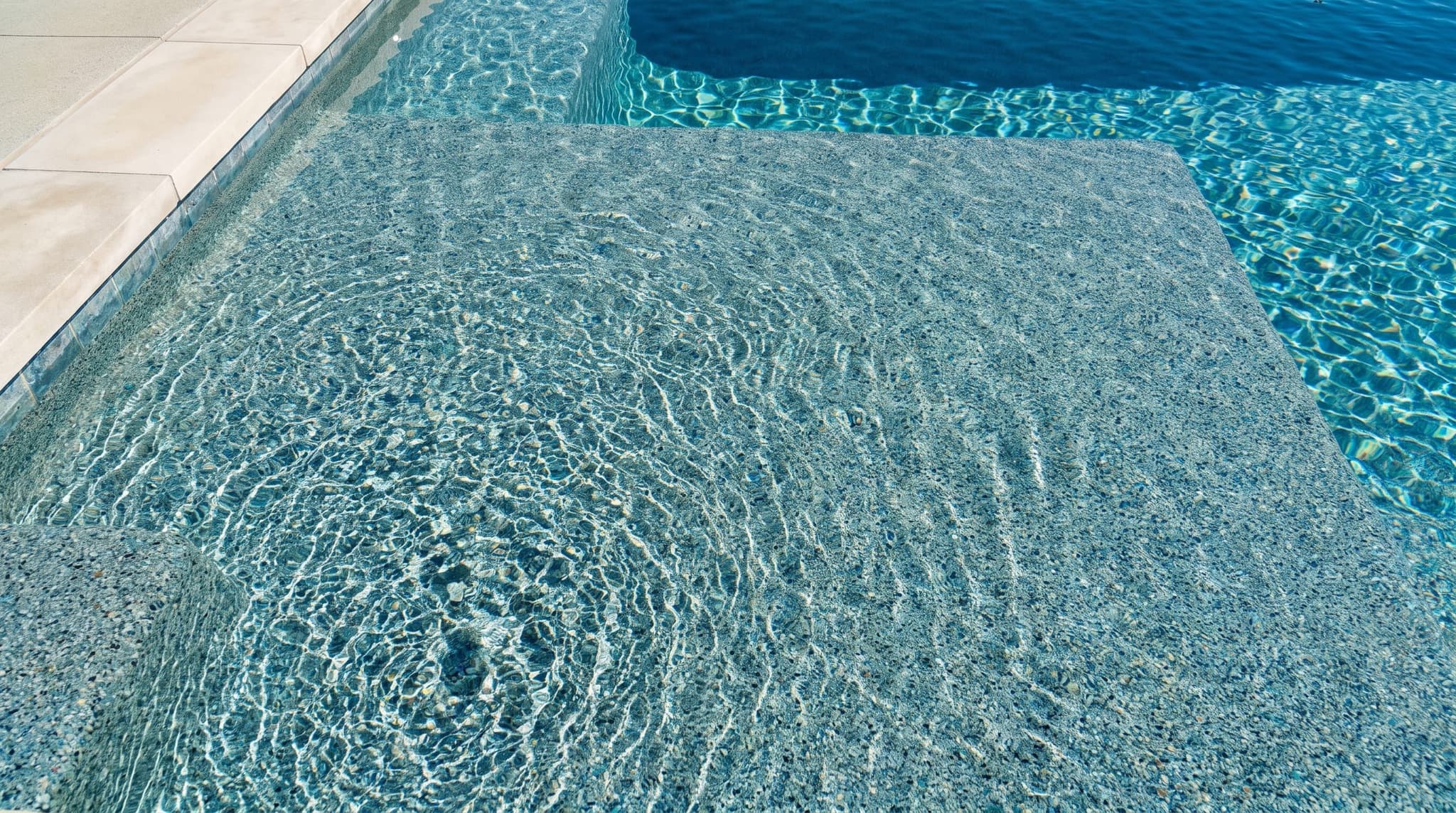
Most pools still have decades left in the shell — it was built to last 50+ years — so when yours shows its age (rough plaster, chipped tile, a loud pump, a faded deck), the question usually isn't "do I need a new pool?" It's "what does this one actually need?" Here's how to tell whether a remodel makes sense, or if it's actually time for a full new build.
Signs you need a remodel, not a replacement
- Plaster is rough, stained, or chalking. This is just finish wear. Strip and resurface, the shell beneath it is fine.
- Tile is chipped, dated, or falling off. Replace the waterline tile. Usually paired with a replaster.
- Coping is cracked or dated. Pop and replace with travertine, tile, or cantilevered concrete.
- Pump is loud, equipment is aging. Swap to a variable-speed pump, modern filter, and automation. A variable-speed pump usually cuts the pad's electricity use enough to pay back the upgrade in a couple of seasons.
- Pool feels dated, not broken. New finish, new tile, maybe a tanning ledge cut in. Cosmetic refresh.
Signs you may actually need a replacement
These are rare, but they exist:
- Shell has structural cracks that have been patched repeatedly. At some point the repair cost exceeds a new build.
- The pool is in the wrong place. Sometimes a 1980s pool was sized or positioned for a different lifestyle. If you're reshaping or moving it significantly, a rebuild may be cheaper than a heavy cut-and-fill.
- You want a fundamentally different pool. Going from a small rectangle to a vanishing-edge with a tanning shelf on a reshaped footprint is closer to a rebuild than a remodel.
A typical remodel breakdown
For most Inland Empire homeowners, a "make this feel like a new pool again" remodel includes:
- Drain and prep, pump out, patch any minor shell damage
- Tile demo and replacement, pop the old waterline tile, install new
- Coping replacement, remove old coping, install travertine or chosen alternative
- Plaster strip and resurface: chip old plaster, bond coat, new pebble or quartz finish
- Equipment upgrade (optional): swap to variable-speed pump, automation, LED lighting
- Refill and startup: fill, balance, brush, start the chemistry cycle
Timeline is typically 2 to 4 weeks depending on scope. Cost is a fraction of new construction.
When to bundle scopes vs. phase them
Bundle anything that requires draining or deck-edge work. Replastering plus waterline tile plus coping replacement is one draindown, one mobilization, and the work coordinates cleanly. Doing them separately adds cost and inconvenience each time.
Phase the equipment upgrade if budget is tight. You can swap the pump and filter without draining the pool, and automation/LED lighting can be added later without touching the shell.
What a good remodel estimate looks like
An estimate worth signing has:
- Itemized pricing for each scope (plaster, tile, coping, coping sub-materials, equipment)
- Specific finish and tile product names. Not just "pebble finish" but which brand and color
- A clear timeline with milestones
- The warranty terms in plain English. In California, the workmanship warranty runs 1 year on the plaster, tile, and coping work, and any equipment we install carries its own manufacturer warranty (3 years on the Pentair set). If the remodel includes shell repair, that shell work carries our lifetime structural warranty for the original owner.
The "just resurface" trap
The cheapest option on paper is a plaster-only refresh. If your tile and coping are genuinely fine, that's the right call. If the tile is chipping and the coping is cracked, replastering alone means you'll be back in a few years doing a bigger, more disruptive remodel. And possibly replastering again because the tile work damaged the new surface.
Ask your builder what they'd do if it were their pool.
Thinking about a remodel this season? Request an estimate with a couple of photos of your pool and equipment pad, and we'll scope it quickly. Or try the cost estimator for a ballpark first.