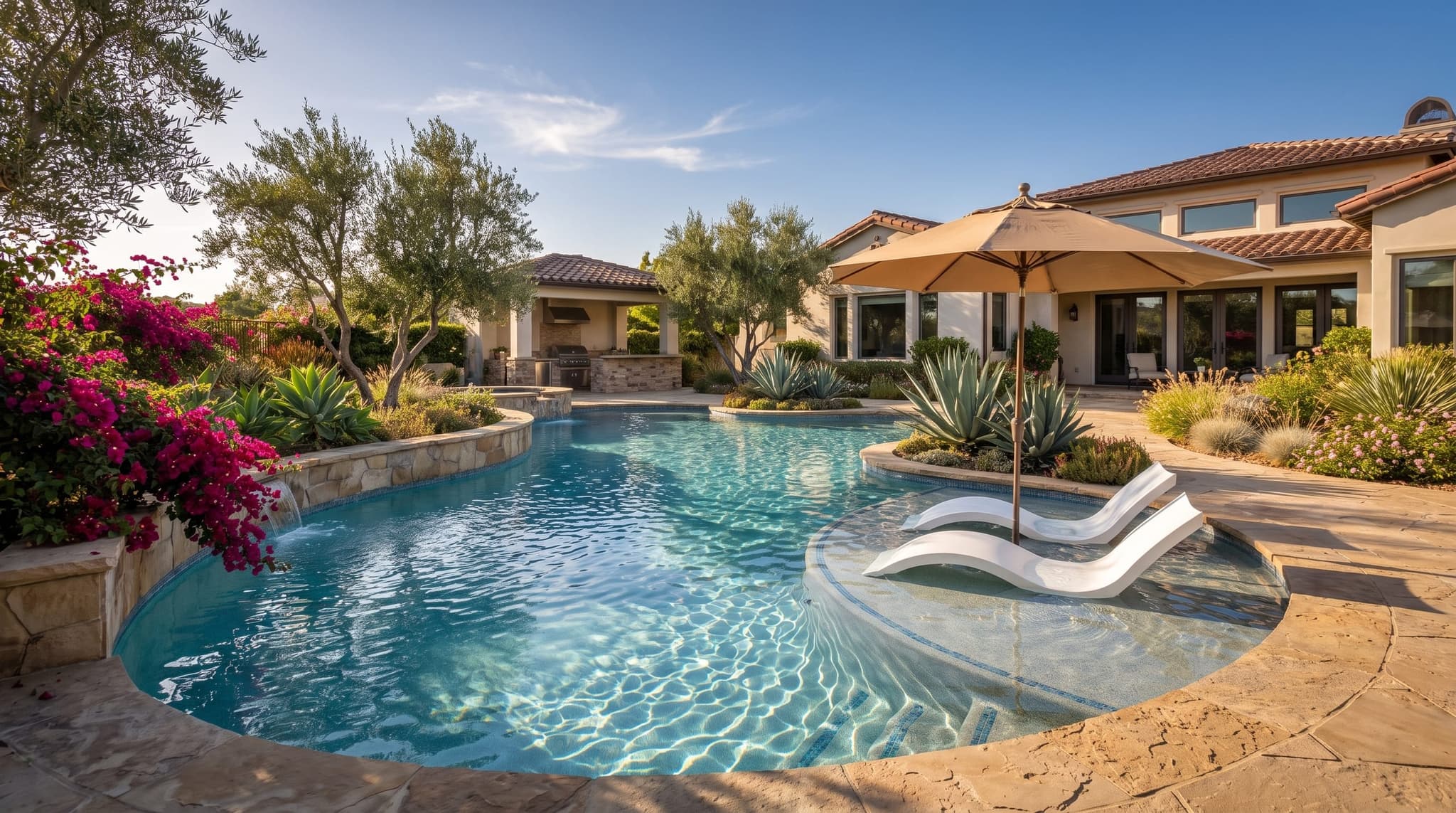
Some people want a pool that's really a personal wellness space. We focus on a properly sized inground spa that heats fast, good jet placement, easy entry/exit, and automation so it's ready when you are — not sitting cold most of the time.
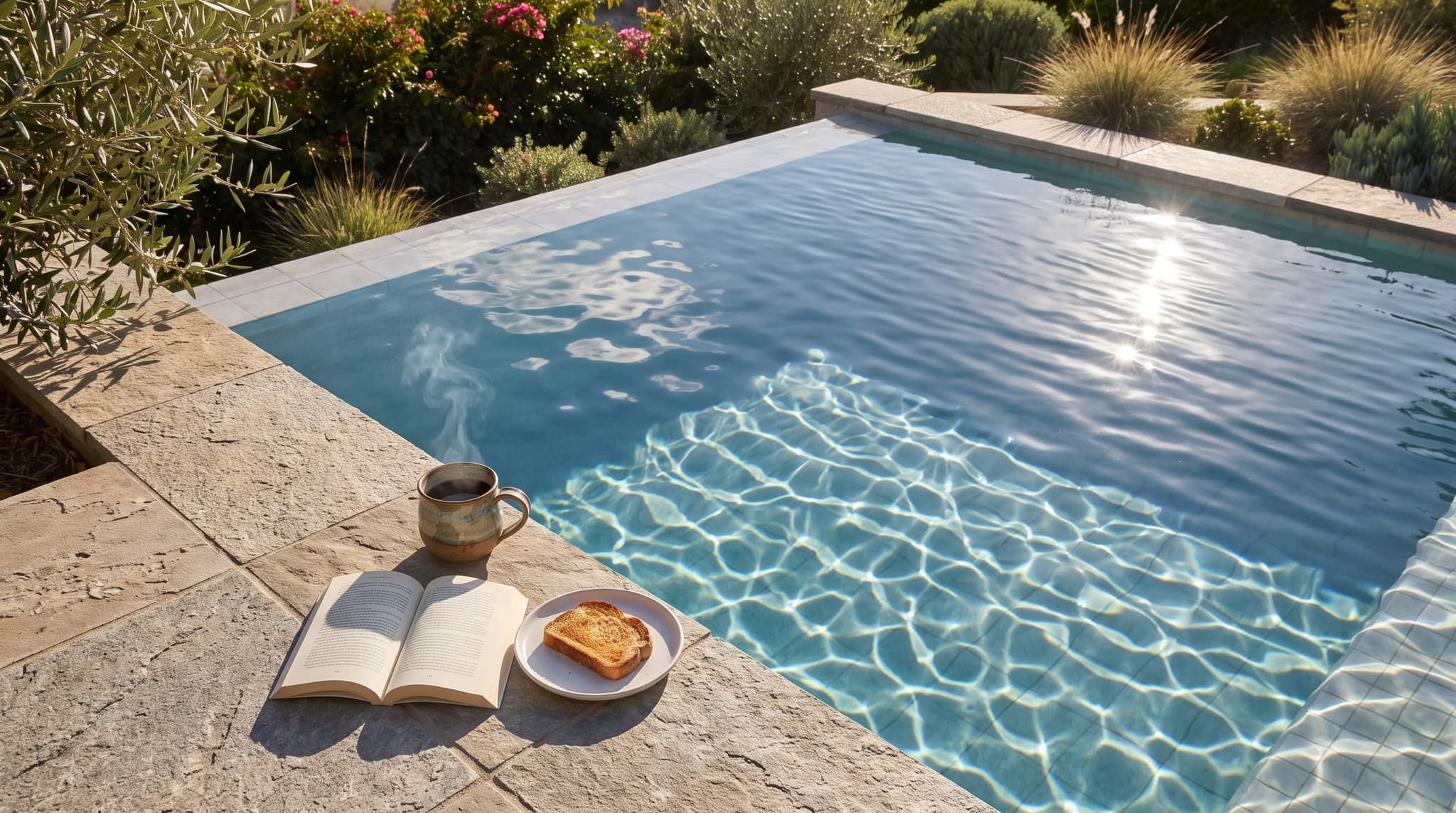
You’ll know it’s you if…
- People who want therapy jets and reliable heat for regular use
- Households with older adults or mobility considerations
- Anyone who values low-maintenance daily relaxation over big swim parties
Anatomy of a wellness build
Daily use is the design driver
Most pools optimize for the weekend party or the photo at sunset. A wellness build optimizes for Tuesday morning. The questions that lead the design are different: how easy is it to get in alone, how long does it take the spa to come up, how often does the household have to touch chemistry, how quiet is the pad at 9 p.m. Once those answers are clear, the geometry, jet placement, and equipment spec follow.
“Most spas come engineered to a stock jet layout.”
Wellness spas don't. We map jet positions to the actual people who'll use them, back, shoulders, lumbar, calves, with the homeowner sitting on a mockup before plumbing rough-in. A spa where the back-jets miss the lumbar by two inches is the difference between daily use and a feature that gets abandoned in six months.
Easy entry, no step-down
Conventional pool steps are wrong for households where mobility matters. Beach (zero) entries, walk-in slopes, and integrated handrails (S.R. Smith ADA-compliant) replace them. We design the entry as a continuous accessible path from deck to spa to pool, with anti-slip surfaces in every wet/dry transition zone.
“On a wellness build, the spa needs to be soaking-temperature within 20–30 minutes of activation.”
That means sizing the heater up, typically 400,000-BTU natural gas or a 140K-BTU heat pump pair, and sizing the spa volume to what gets used (4-person therapy, not 8-person party). Smart automation lets you trigger heating from the kitchen on the way to morning coffee, ready by the time you're in your robe.
Low-maintenance equipment spec
Saltwater chlorination (zero chlorine handling), variable-speed pumps (quiet, energy-efficient), automation that handles chemistry and filtration scheduling, and a chemistry-feeder serviced twice a year instead of weekly. We spec equipment that lets a household maintain their own pool without becoming pool technicians. Or makes pool service visits simple and cheap when the homeowner prefers that.
The features that go with this kind of pool.
Every feature here has its own deep-dive guide explaining what it is, how it’s built, and the trade-offs to know.
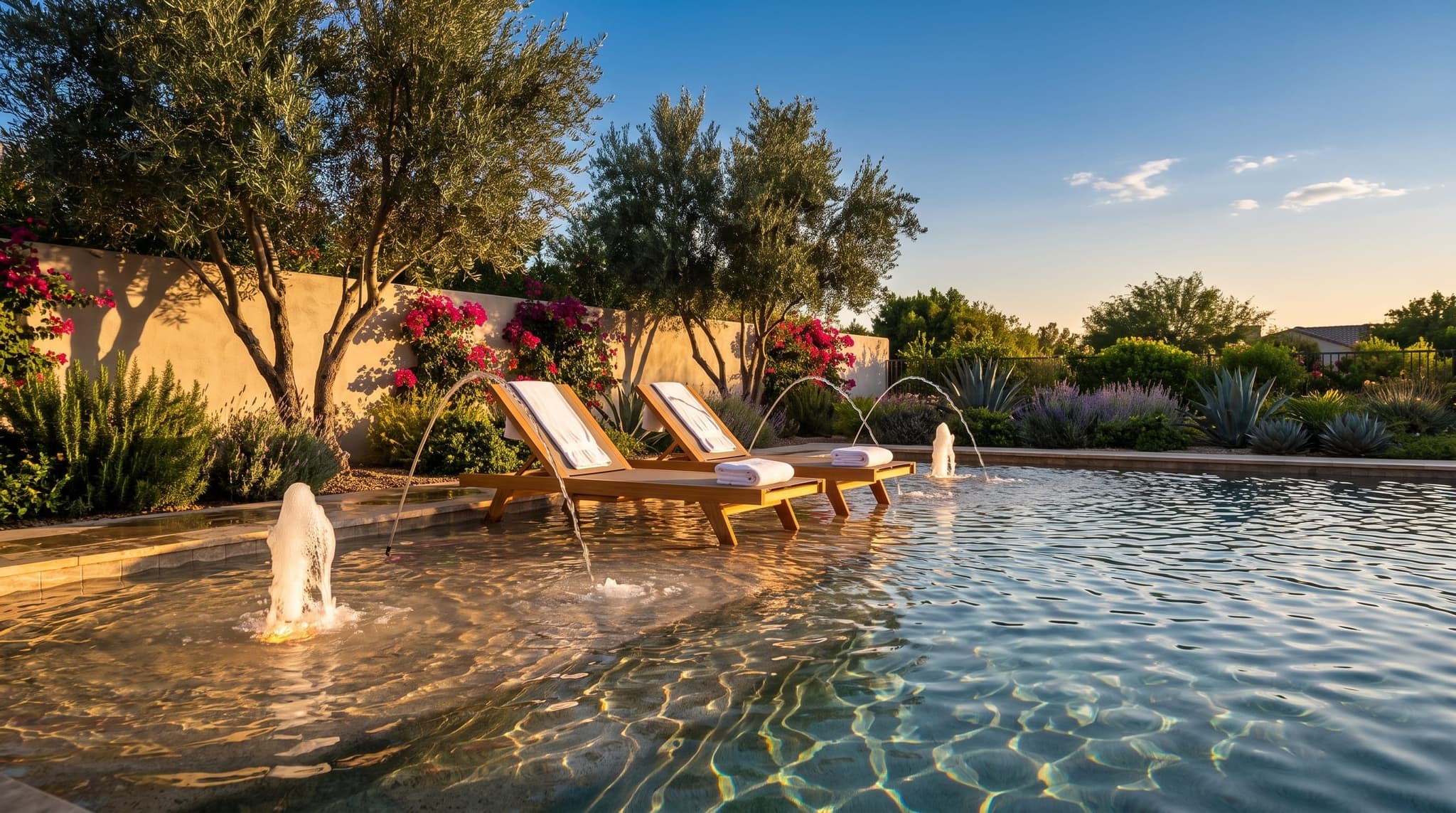 A shallow step to lounge in
Tanning Ledge / Baja Bench / Sun Shelf Design
Read the guide Pre-heat the spa from the car
Pool Automation
Read the guide No chlorine smell, top up salt once or twice a year
Saltwater Pool Chlorination
Read the guide The cheapest dramatic upgrade
Pool LED Lighting
Read the guide Lasts 2–3x longer than plaster
Pebble Pool Finish
Read the guide Walk-in shallow end
Beach Entry & Zero Entry Pools
Read the guide
Wellness builds lean into warm, calming, anti-slip materials with restraint on visual drama. The palette supports daily use, easy maintenance, and a sense of quiet rather than spectacle.
 Interior finish
Mini Pebble Pool Finish or polished pebble in warm neutrals
Smoother-aggregate finishes are easier on bare feet and on aging skin. Warm tans, soft greys, or muted blues create a calmer aesthetic than saturated colors.
 Waterline tile
Soft-toned glass or stone mosaic: earth tones, muted blues
Quiet color palette supports the wellness aesthetic. Avoid bright contrast or busy patterns that compete visually.
 Coping
Safety-grip precast concrete or natural-stone bullnose
Safety-grip profile is the gold standard for wellness builds, anti-slip texture cast into the coping itself, not a coating that wears off. Natural-stone bullnose works on premium builds where aesthetics matter equally.
- DeckingDecking
Broom-finished concrete with grit additive, or textured travertine
Anti-slip is non-negotiable. We extend the grit-additive zone beyond just the entry, the entire pool-side deck gets the treatment.
- Spa rails and access hardwareSpa rails and access hardware
S.R. Smith ADA-compliant stainless rails, integrated grab bars
Properly anchored, rated to handle real weight, designed to function as part of the architecture not as a medical-equipment retrofit. Integrated grab bars in the spa wall are the difference between safe daily use and abandoned investment.
- Equipment and automationEquipment and automation
Variable-speed Pentair IntelliFlo + heat-pump heater + simplified IntelliCenter app
Heat pump is more efficient for daily-use spa heating in IE climate (10–12 month season). IntelliCenter app can be configured with large-button presets, 'spa now,' 'pool only,' 'all off', for easy daily operation.
Build considerations specific to wellness builds
Built to stay usable as mobility changes
Even on residential builds, ADA-aligned design (rail placement, anti-slip surfaces, barrier-free entry path, generous step widths) makes the pool usable across decades of changing mobility. We design for the household's current and future use. Not just the day-one user.
Heat economics in valley microclimates
Hemet, Sun City Menifee, San Jacinto, and similar valley locations get cooler winter nights than coastal IE, a heat pump alone struggles below 50°F ambient. We pair a heat pump (efficient daily) with a gas heater (high-capacity for cold mornings) on most wellness builds in those areas. The setup is more expensive up front but pays back in operating cost over a 10-year horizon.
One-tap presets, not a phone full of menus
Automation can be intimidating to the household that primarily uses the spa for therapy. We program 'one-tap' presets (spa-now, pool-on, all-off) on the controller and on a kitchen-counter remote, not just in the app. Voice integration via Alexa or Google Home for hands-free operation when soaking.
Adjust chemistry monthly, not weekly
Saltwater chlorination, an automated chemistry feeder, an oversized cartridge filter (twice the typical area, half the cleaning frequency), and a robotic cleaner that runs on a schedule. The homeowner makes a chemistry adjustment monthly, not weekly. Or a service visits quarterly, not biweekly. The maintenance plan is part of the design conversation.
Picturing this in your yard?
Ballpark it in two minutes, or have an owner walk the lot with you.
Can I get in and out of this easily at 70?
Not the right pool for you if…
We’d rather you find the right style than build the wrong pool.
- Your priority is a kid-zone family pool, wellness builds optimize for adults and accessibility
- You want a dramatic resort-style backyard, the wellness palette is intentionally quiet
- Competitive lap swimming is the primary use case, wellness builds usually trade swim length for spa scale and easy access
- Budget constraints rule out premium equipment specs, entry-level wellness builds compromise too many of the operational benefits
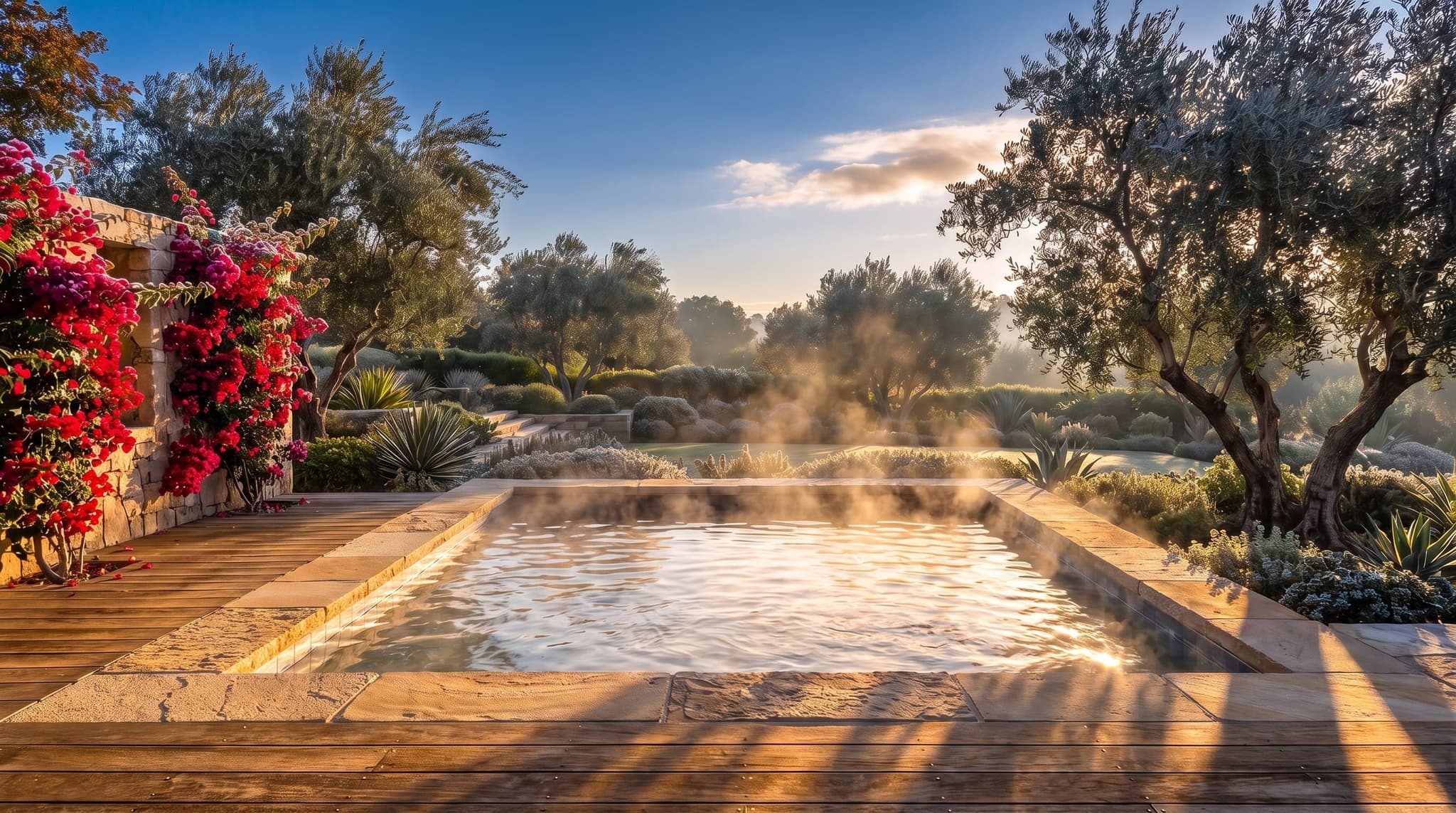
Maybe one of these is closer to what you’re after.
- If your priority is…
If accessibility matters but kid-zone usability is also a priority
The Family Pool →
- If your priority is…
If the lot is small and architectural geometry matters as much as daily-use rhythm
The Compact Modern →
- If your priority is…
If you have an existing pool and want to add wellness features (spa upgrade, beach entry, anti-slip deck)
The Remodel Revival →
Sound like the right pool for your life?
Share what you’re imagining, who lives there, what’s already working in the yard. An owner follows up promptly to set up an in-home walkthrough. You do the talking, we do the measuring.