What a beach entry actually is
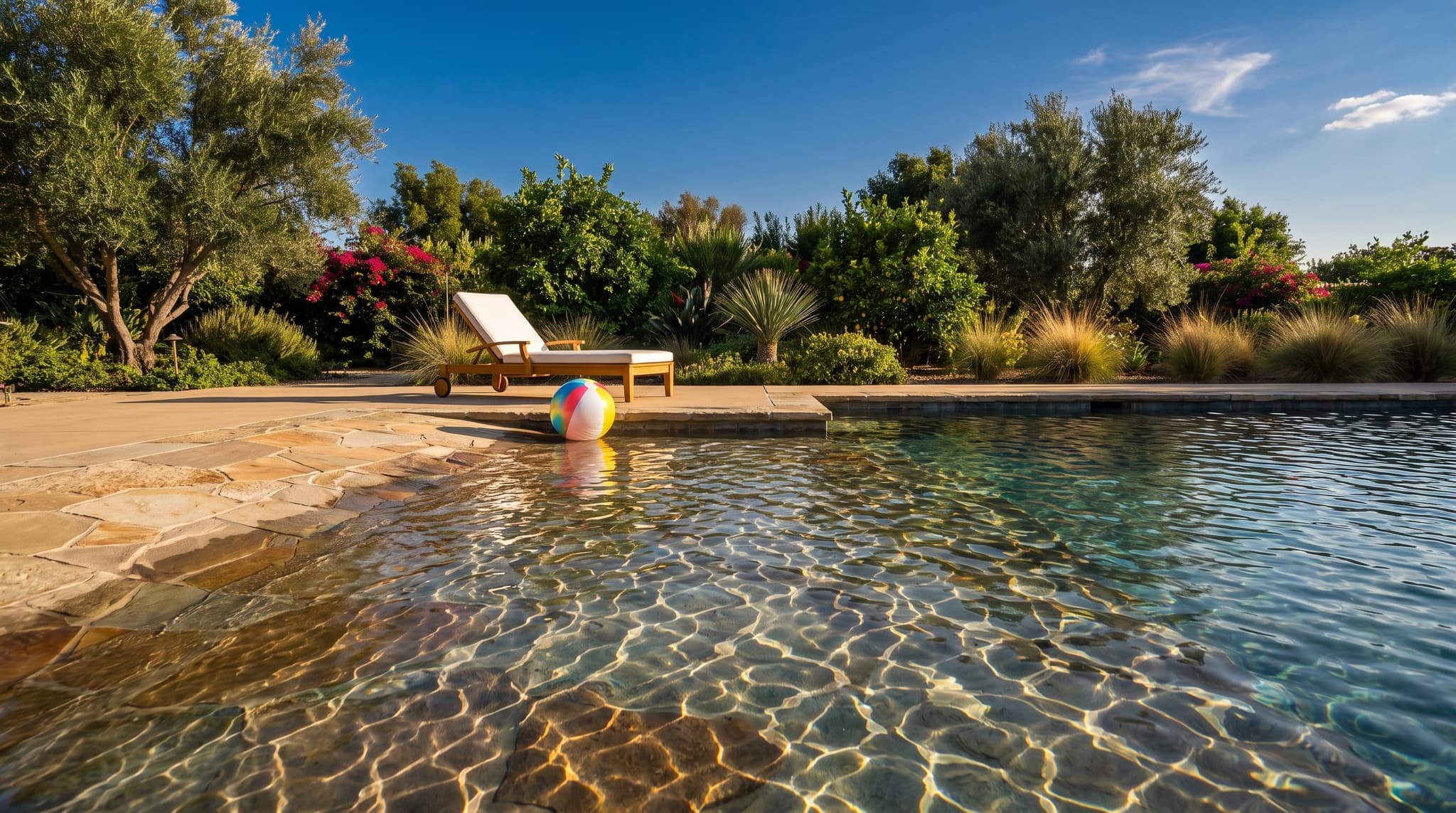
A continuous slope from the pool deck into the pool, typically running at about 1 inch of depth per foot of horizontal travel. After 8 to 12 feet of slope you're in 8 to 12 inches of water, wading depth, ankle to mid-shin. Most beach entries fade into a tanning ledge at the bottom of the slope before transitioning to full pool depth, so you get a continuous shallow zone perfect for toddlers, lounging adults, and groups with a mix of ages and abilities. The slope replaces conventional pool steps entirely.
How we build a beach entry that drains, doesn't slip, and lasts
Slope grade and length
We design the slope at roughly 1 inch of fall per 12 inches of run, gentle enough to walk down comfortably, steep enough to keep the footprint reasonable. Steeper slopes feel like a ramp; gentler slopes eat too much yard. 8 to 12 horizontal feet is the sweet spot for most lots.
Surface texture matters more than usual
Wet pebble can be slick at zero depth where the surface is partially out of water. We spec smaller-aggregate pebble (mini-pebble) for the entry zone or apply an anti-slip additive in the upper few feet. Rolled-finish concrete with grit is the budget alternative when aesthetics allow.
Drainage planning
Water at the deck-pool interface needs somewhere to go. We pitch the deck away from the entry slightly so deck water flows to deck drains, not into the pool entry zone. Without this, deck runoff carries debris straight into the shallow end every time it rains.
Bubblers and ledges integrated
Most beach entries fade into a flat tanning shelf at the 9–12 inch depth before stepping down to full pool depth. We plumb 2 to 4 bubblers into the shelf zone: kids gravitate to them, and the moving water keeps the shallow zone from getting stagnant on hot days.
Code compliance, barriers and anti-entrapment
California requires a pool barrier (fence, self-closing door alarms on every house door leading to the yard, or a compliant safety cover) and anti-entrapment hardware on every suction outlet, true regardless of whether the entry is a beach slope or conventional steps. We walk you through the barrier options during permit submittal, pull the permit in our name, and meet every inspection so you're not the one fielding calls.
- Families with toddlers and pre-school-age children, the most-used feature for households with kids under 5
- Multi-generational households, easy water access for grandparents
- Households with mobility considerations. No step or ladder required
- Larger lots with footprint to spare. Beach entries eat 8–12 horizontal feet of pool length
- Freeform and rectangular pools (not ideal on tight geometric or kidney shapes)
Beach Entry & Zero Entry Pools, frequently asked.
What's the difference between beach entry and zero entry?
They're the same thing. "Zero entry" is the technical term for a slope that starts at zero depth (no step). "Beach entry" is the marketing term that describes how it feels, like walking into the ocean on a sandy beach. "Walk-in entry" and "sloped entry" are also used. All four describe the same feature.
How much pool footprint does a beach entry need?
Plan on 8 to 12 horizontal feet of slope to reach typical 8–12 inch wading depth. Longer slopes feel more gradual but eat into the pool's swimming-depth zone. On a 30-foot pool with a 12-foot beach entry, you have 18 feet of full-depth swimming space. Comfortable for laps and play but not Olympic. We size the entry to the lot and how the family will use the pool.
Can I add a beach entry to an existing pool?
Sometimes. It requires removing a section of the existing shell, extending the pool footprint, shooting new sloped structural floor, and matching the new surface to the rest of the pool. Beach entries on remodels are doable on properties with adequate yard space, we've done several Inland Empire conversions during full-resurface remodels where the work overlaps.
Is a beach entry slippery?
It can be where the surface is partially submerged, the wet/dry transition zone. We mitigate with smaller-aggregate pebble finishes that have more grip, or with anti-slip additives in the upper few feet of slope. Standard pebble finish is fine fully submerged but slick at the waterline. The right finish choice solves this; we'll spec it during design rather than as an afterthought.
Do beach entries cost more to maintain?
Slightly. The shallow zone heats faster and evaporates faster than deep water, so you'll top up volume a bit more often. Debris (leaves, dirt) tends to settle in the shallow zone, a beach-entry brush during weekly cleanup keeps it tidy. Otherwise the pool maintains the same as any other pool of equivalent volume.