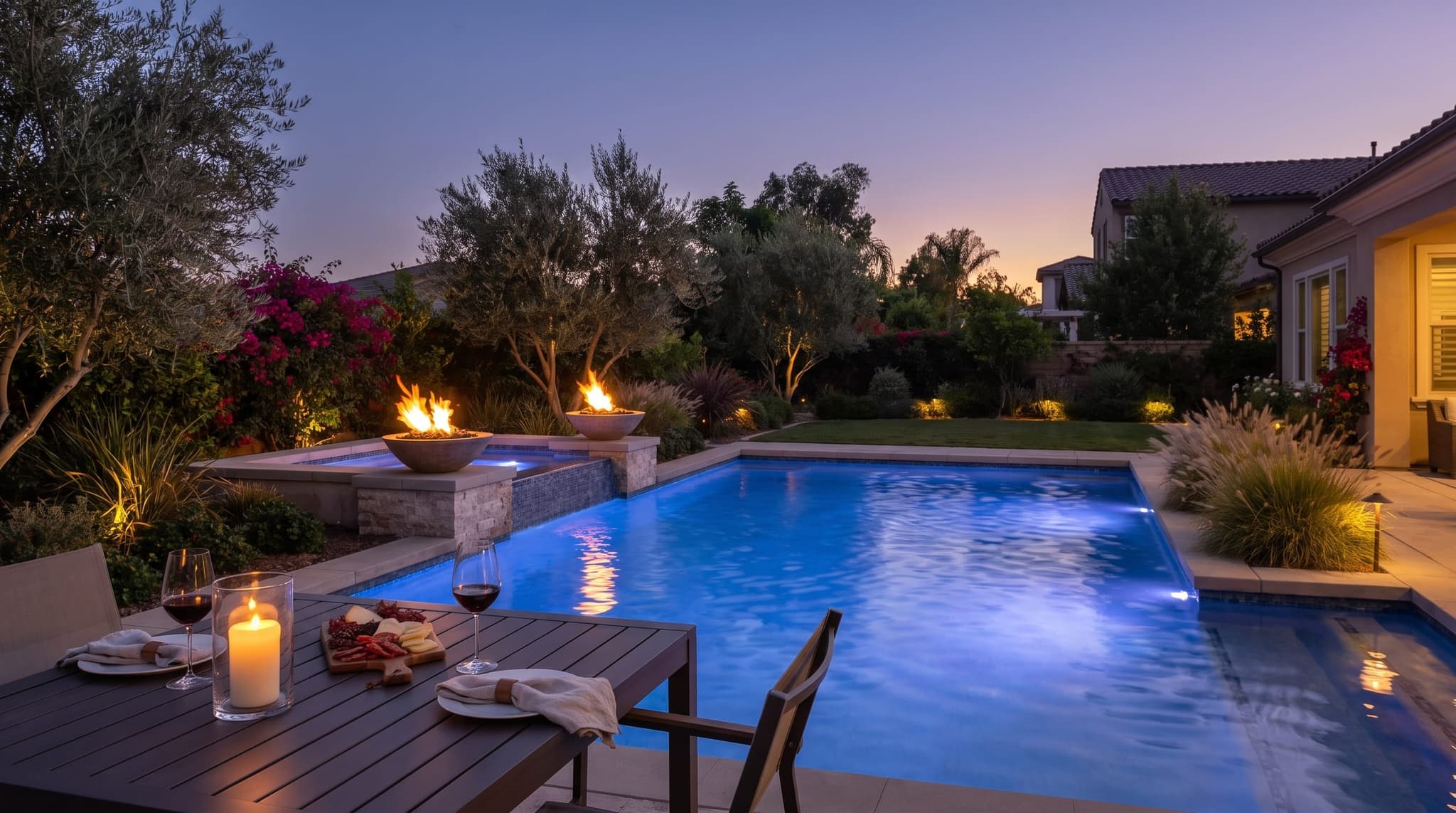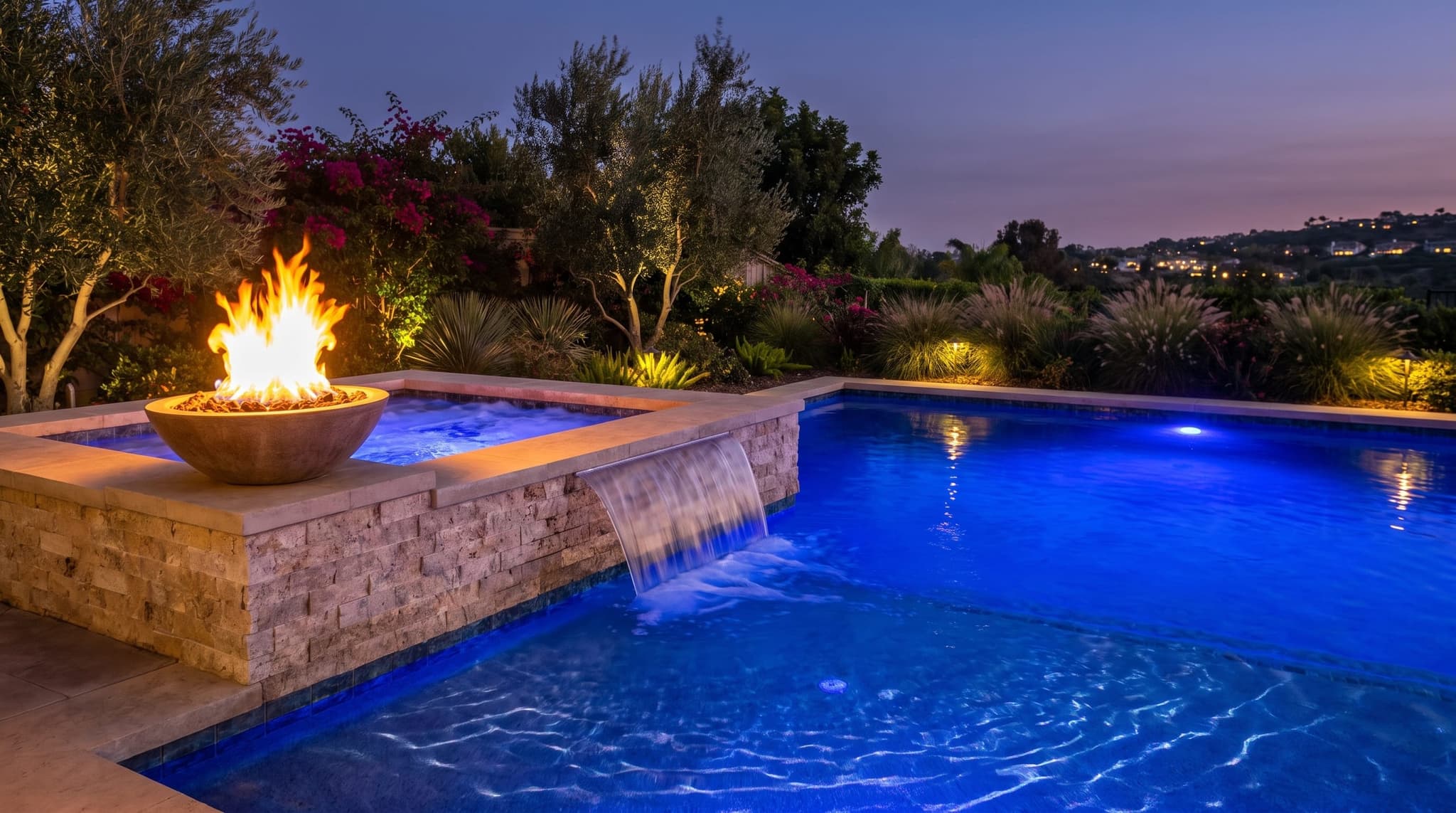
The fire features we integrate
Fire bowls (round or square, on pedestals or integrated into walls), fire pits (stand-alone gathering pieces), and fire walls (linear flames along raised-wall edges). All run on natural gas or propane, all tie into your pool-automation system for one-button on/off, and all pair spectacularly with water features when they sit side-by-side.
Fire integration basics
Natural gas vs. propane
Natural gas is cheaper to operate long-term and runs off your existing house line, if your property has NG service. Propane is what we install when the property doesn't. Propane requires a tank (above-ground or buried) and tank-refill scheduling. For most IE properties with NG service, NG is the obvious pick.
Gas line sizing & permits
Gas lines for fire features go through city inspection as part of your pool permit. Undersized lines starve the feature; oversized lines cost more than they should. We size to manufacturer specs and pull the permit in our name.
Automation integration
We can tie ignition into the Pentair IntelliCenter automation platform. One tap on your phone and the pool lights, water features, and fire all come on together. Manual-only ignitions are usually a step backward, we'll talk through it on a build-by-build basis.
Placement strategy
Fire bowls on raised spa corners next to sheer-descent spillovers create the iconic night shot. Fire walls along raised pool edges create a linear horizon of flame. Stand-alone fire pits work as the social anchor away from the pool. We sketch placement before we dig.
Wind & weather planning
Prevailing winds in the Inland Empire matter. Santa Ana winds or Temecula Gap marine flow will blow a fire bowl's flame sideways. We orient features accordingly, and on windy lots, recommend a burner with higher BTU output that stays lit in wind.
- Raised-spa builds, fire bowls on the corners are the signature shot
- Geometric pools with clean architectural lines, fire walls fit the aesthetic
- Evening-entertaining backyards where the pool runs late into the fall
- Winter-use properties, heat radius from a fire pit extends outdoor season
Fire Features for Pools, frequently asked.
Can I convert a fire bowl from propane to natural gas later?
Usually, the feature itself is often conversion-capable. What requires work is the gas line from the house to the feature. If we stub a natural gas line during construction even when you install propane initially, you can swap later with only a small reconfiguration cost. If we don't, you're trenching through finished hardscape.
Are pool fire features safe around kids?
As safe as any gas appliance. The burners are sealed under glass or lava rock; the ignition is remote-controlled; there's no open flame to touch when the feature is off. We recommend keeping the automation app's ignition passcode-protected on households with young children.
How much does it cost to run a fire feature?
A typical 100,000-BTU fire bowl on natural gas runs roughly $1.50–$2 per hour of use in the Inland Empire at 2026 SCG gas rates. Propane is about 2x that. Most homeowners run features 2–3 hours an evening a few times a week, so monthly cost lands in the $20–$50 range.
Do fire features require separate permits?
The gas line and connection work is part of your pool permit's plumbing/gas inspection. No separate permit required for the feature itself on residential installations. We handle the permitting in our name.