What rockscape actually encompasses
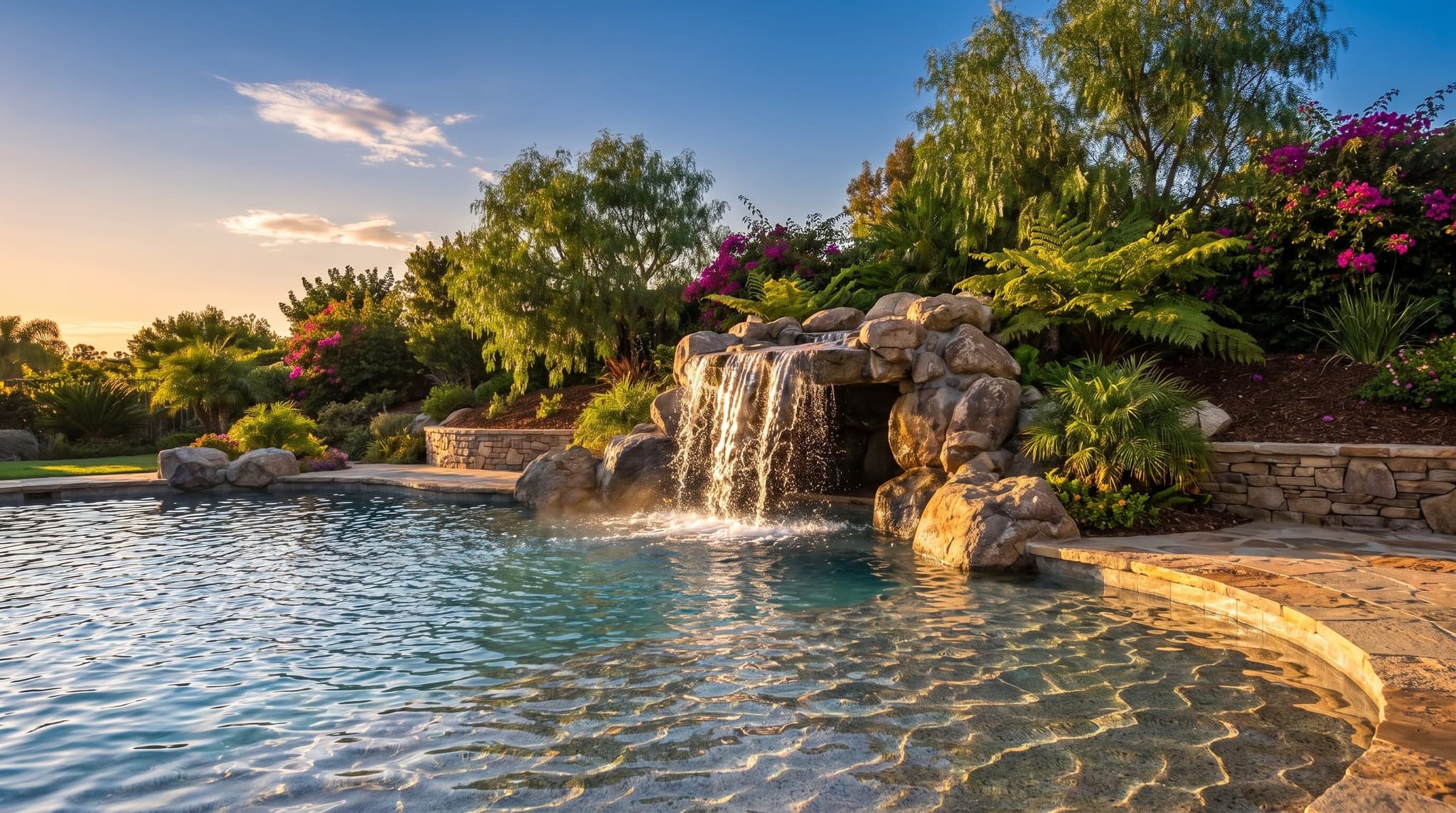
Real rockscape is a composite of engineered structure, natural or premium cultured stone, properly placed and mortared by hand, and integrated water plumbing for waterfalls or streams. It spans rock waterfalls (the most common), boulder pool edges (naturalistic transitions from deck to water), grottos (cave-like structures you can swim into), and rock-formation accents that hide equipment pads or separate pool zones. Each requires its own structural approach.
How we build rockscape that doesn't look fake
Natural vs. cultured stone
Natural stone (sandstone, granite, quartzite boulders sourced from California or Arizona quarries) looks authentic and ages beautifully. Cultured stone is lighter, cheaper, and, if done well, can look convincing for 10–15 years. Most Inland Empire rockscape uses a hybrid: natural stone for visible faces, cultured or concrete for hidden structural cores.
Structural cores first
The rockscape skeleton is engineered shotcrete or concrete block, sized to support the stone load and tied to the pool shell. We engineer this before a single piece of stone is placed.
Hand-placement, not pile-placement
Natural rockscape is composed stone by stone, with each piece chosen for fit and placed by hand. The cheap alternative, dumping a pile of boulders against a concrete core, is how bad rockscape gets built. Ask to see a builder's rockscape portfolio before signing.
Water plumbing integration
For waterfalls, plumbing is stubbed through the structural core before stone placement. A separate variable-speed pump drives the waterfall flow independent of main filtration so you can run it only when you want the sound.
Lighting designed in, not added later
LED lighting embedded within the rockscape, uplights on waterfalls, accent lights in grottos, is wired during construction. Bolt-on lights after the fact look tacky and fail from thermal cycling.
- Freeform and naturalistic pool designs (not modern rectangles, aesthetic clash)
- Yards with enough footprint to give a rockscape breathing room
- Hillside lots where rockscape doubles as retaining-wall solution
- Home styles that match, Spanish, Mediterranean, ranch, craftsman, rather than strict contemporary
Rockscape Pools, frequently asked.
How much does a pool rockscape waterfall cost in the Inland Empire?
A simple natural-stone waterfall runs $6,000–$12,000 installed. More elaborate formations with multiple drops, wider footprint, or integrated stream beds run $8,500–$20,000. Full grottos with swim-under cave structure typically land in the $22,000–$32,000 range depending on size.
Does rockscape affect my pool's maintenance?
Slightly. Natural stone needs occasional sealing (every 3–5 years) to keep mineral deposits from building up. Waterfall pumps and plumbing are separate zones that need the same routine care as the main pool. Grottos can accumulate debris in corners, a pool-service skimmer takes care of it.
Will the stone fade in Inland Empire sun?
Natural stone typically doesn't fade but can develop mineral staining over years, usually desirable, gives it the aged look. Cultured stone with pigmented concrete can fade in direct UV over 10–15 years; premium cultured stone with UV-stable pigments resists this well. We recommend natural stone on visible faces for long-term appearance.
Can I add rockscape to an existing pool?
Yes. Rockscape is one of the more common remodel additions we do. The structural core ties into existing deck or new hardscape, plumbing stubs into the existing pool circulation, and the stone is placed around it. Budget $10,000–$30,000 for a retrofit rockscape depending on scope.