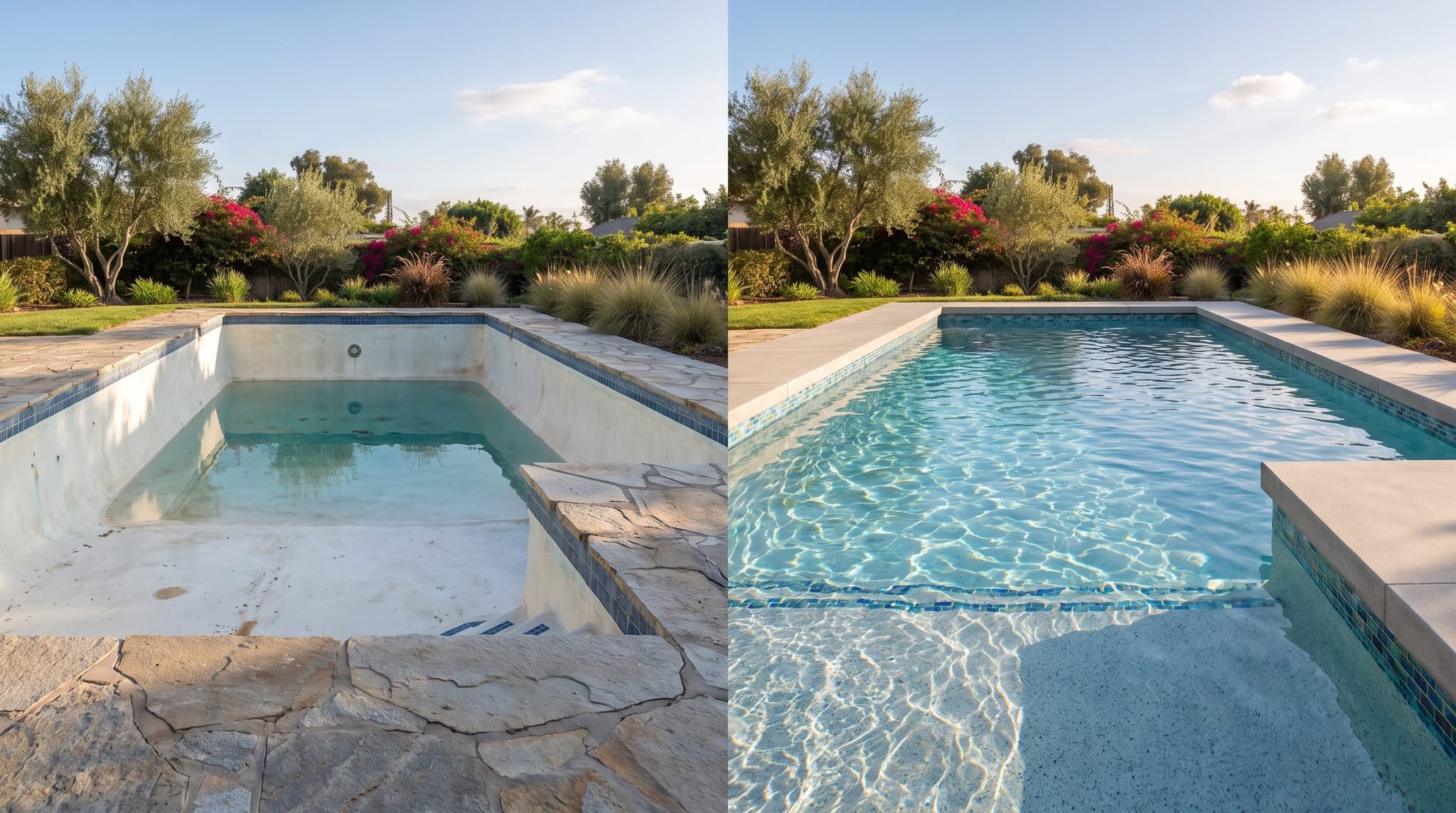
Most pools still have decades left in the shell. A targeted remodel — new plaster or pebble, fresh tile and coping, updated equipment — can make it look and run like new for a fraction of a full replacement.
You’ll know it’s you if…
- Existing pool owners, typically 15 to 30 years old
- Pools that look tired but are structurally intact (rough plaster, chipped tile, dated equipment)
- Owners who want to know what's worth fixing before they decide on scope
- Properties where rebuilding is impractical or unnecessary
- Homeowners weighing 'remodel vs. replace' and wanting an honest scope assessment
Anatomy of a smart remodel
Condition assessment first, scope second
Before we propose anything, we walk the pool with you. Run a hand along the plaster and tile. Look at the waterline tile and coping for chipping or movement. Listen to the equipment pad. Check the structural shell for cracks or settling. The honest assessment determines what you have to fix (structural integrity), what's worth fixing (functional or visual upgrades), and what's optional (cosmetic-only). We come back with a written scope before quoting. Never a quote without a scope.
“Remodel decisions live on a spectrum, not a binary.”
We typically present three or four layered scopes: 'minimum to get another 10 years' (resurface + minor equipment), 'mid-tier visual refresh' (resurface + tile + coping), 'full functional upgrade' (everything plus deck, equipment, automation), and 'full gut' (new shape, new features, essentially a rebuild within the existing footprint). Each tier has its own line items so you can pick the layer that fits the budget and what you want.
What's worth keeping vs. replacing
Old pool shells are often fine: shotcrete was over-engineered in the '80s and '90s, and a 25-year-old shell with no settling, no significant cracking, and no waterline crystallization is structurally good for another 20–30 years. The plaster is what aged. The tile is what dated. The equipment is what got loud. We diagnose at the shell level and don't replace what doesn't need replacing.
“Some remodels add new features: cutting a tanning ledge into the existing shell, installing a beach entry, adding a raised spa with spillover, retrofitting LED lighting and automation.”
These are doable but cost more per-feature than building them into new construction. We're honest about which add-ons make sense as part of a remodel and which would be cheaper as part of a full new build down the road.
Drainage, refill, and chemistry-balance economics
Every remodel involves draining and refilling. That's $600–$825 in water cost depending on pool volume. Bundling multiple scopes (resurface + tile + equipment in one mobilization) saves drain-and-refill cost vs. doing them separately over several years. We map the bundle economics during scope so you can decide whether to do it all now or sequence it over time.
The features that go with this kind of pool.
Every feature here has its own deep-dive guide explaining what it is, how it’s built, and the trade-offs to know.
 Lasts 2–3x longer than plaster
Pebble Pool Finish
Read the guide No chlorine smell, top up salt once or twice a year
Saltwater Pool Chlorination
Read the guide Pre-heat the spa from the car
Pool Automation
Read the guide The cheapest dramatic upgrade
Pool LED Lighting
Read the guide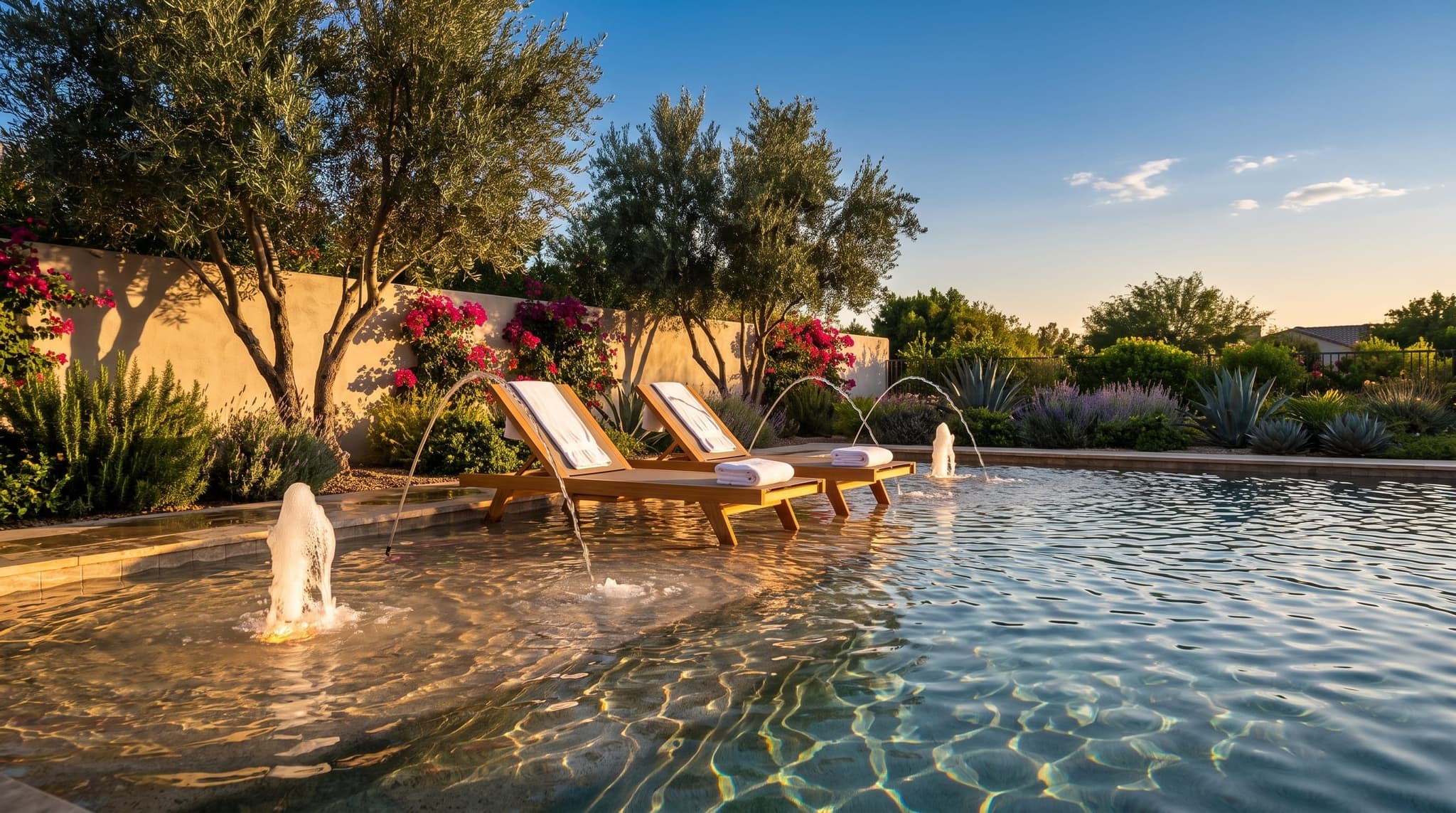 A shallow step to lounge in
Tanning Ledge / Baja Bench / Sun Shelf Design
Read the guide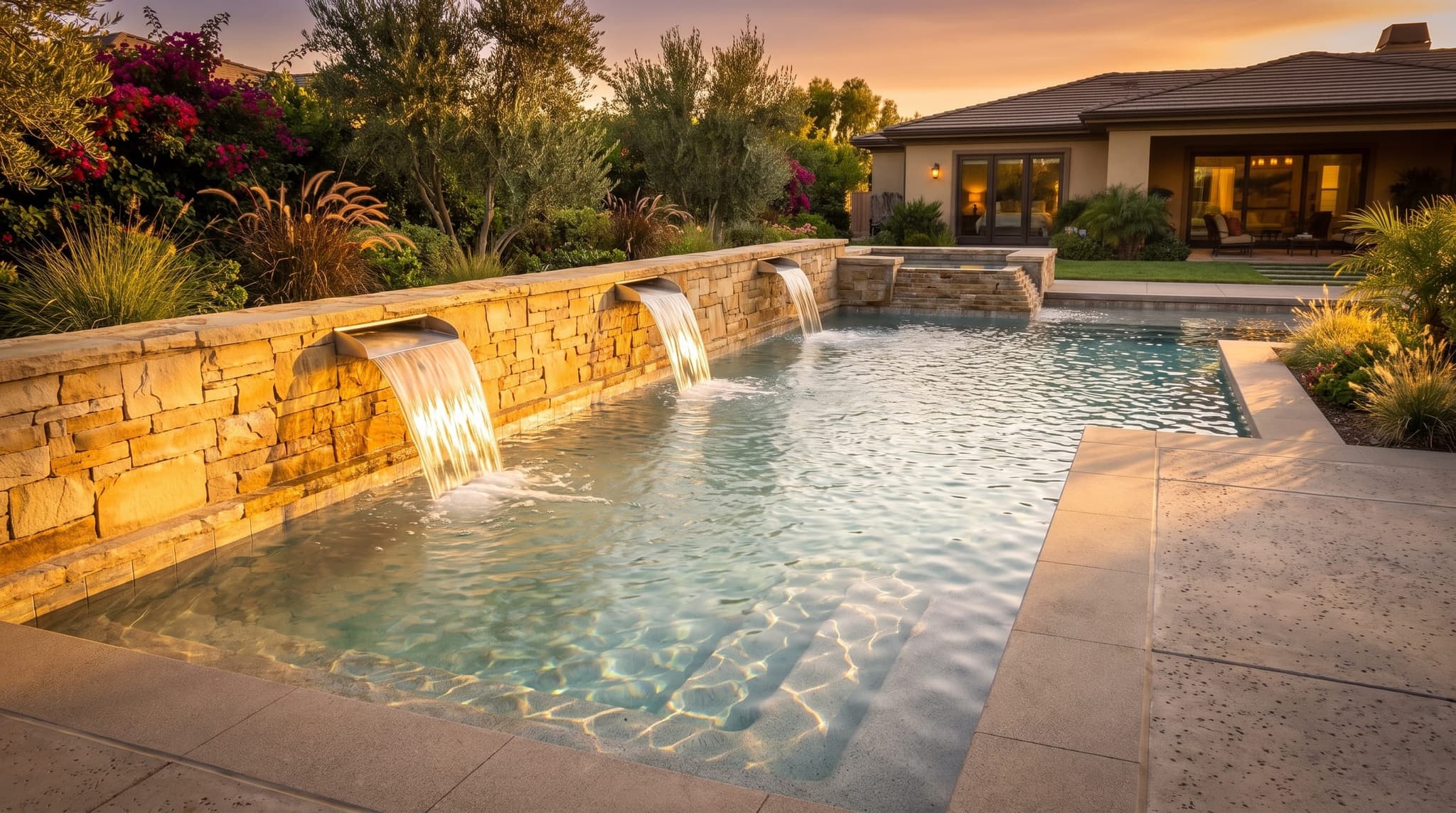 Mostly about the sound
Water Features
Read the guide
Remodel material choices are constrained by what's already in place: existing shell shape, existing coping line, existing equipment locations. The palette below is what we typically spec when the homeowner wants to maximize visual change for the scope budget.
 New interior finish
Pebble Pool Finish or Mini Pebble Pool Finish: pebble over plaster
Pebble lasts 15–20 years vs. plaster's 7–10. Adding $3.6K–$6K to a $14K resurface scope buys 2–3x the lifespan.
 New waterline tile
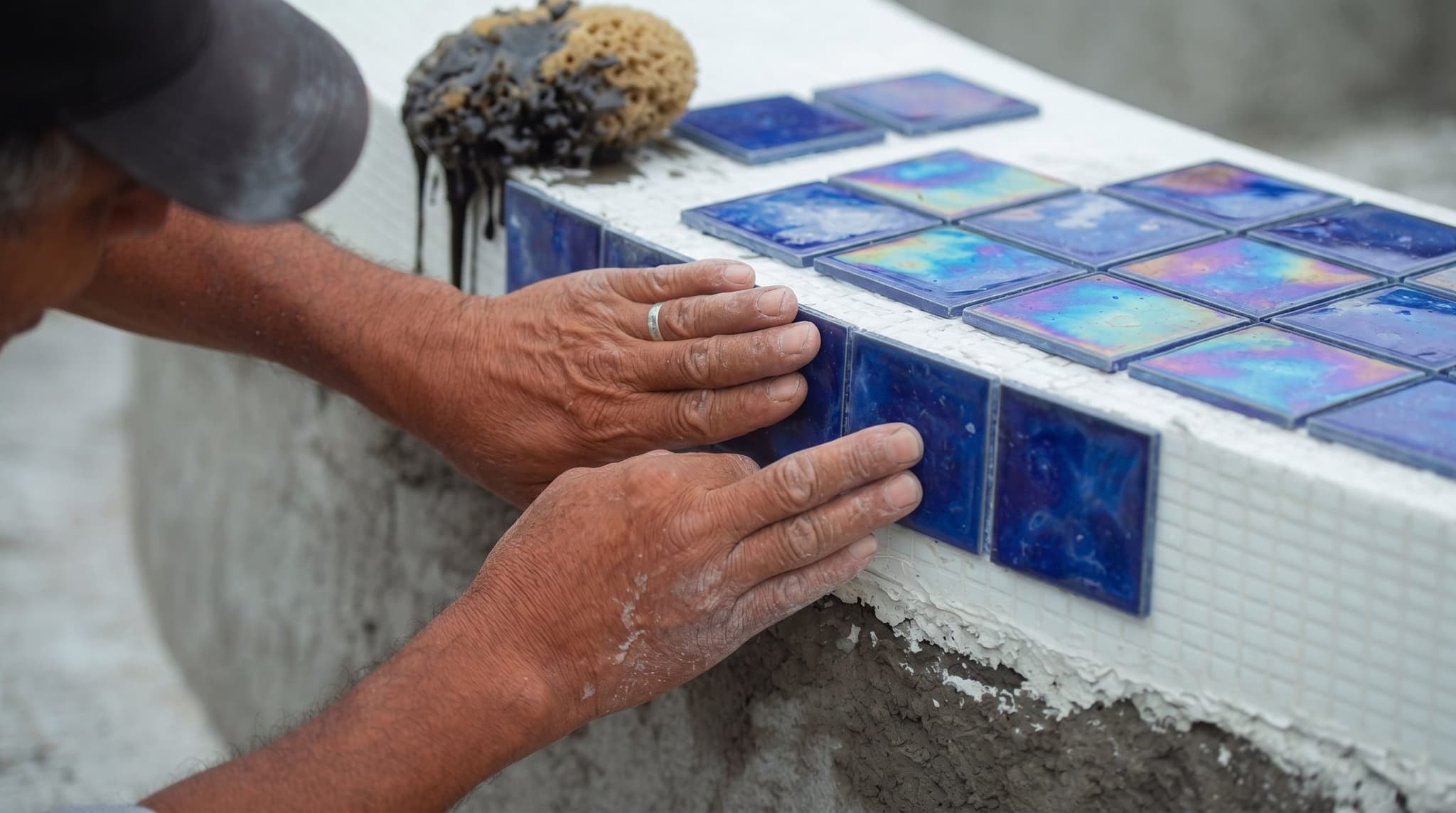
Glass mosaic in a refresh color, saltwater-resistant
Tile replacement gives the biggest visual change per dollar of any remodel scope. Pair with a resurface and the pool reads as new.
 New coping
Travertine, bullnose tile, or precast concrete
Coping replacement is more involved than tile or plaster, bond-beam exposure required, but it makes an old pool read years younger. Worth it on remodels of 25+ year-old pools.
- Equipment upgradeEquipment upgrade
Variable-speed Pentair IntelliFlo + automation controller + LED retrofit
Variable-speed pumps cut energy cost by 50–75% over single-speed. State of California now requires VSP on all new and remodel installations. The controller upgrade unlocks app control and scene presets.
- Saltwater conversionSaltwater conversion
Salt-cell installation in existing plumbing
Easiest sanitation upgrade, drops into the existing equipment pad with minimal plumbing change. Eliminates the chlorine-tablet weekly chore.
- Deck refreshDeck refresh
Stamped-concrete overlay or pavers over existing slab
Replacing the entire deck is expensive ($10K–$40K, with pavers running roughly 3x). Overlaying a structurally-sound existing deck is 30–50% less than full replacement and gives the whole perimeter a new look.
Build considerations specific to remodels
The condition assessment is non-negotiable
We won't quote a remodel without a site visit. Photos help, but the structural shell, the equipment-pad reality, and the deck condition all need real eyes on them. A 90-minute visit upfront prevents the 'we found something' surprise during demolition.
Scope sequencing and timing
Most remodels run 2–8 weeks depending on scope. A simple resurface is 5–10 days; resurface + tile + coping is 3–4 weeks; a full gut runs 6–8. We map out a milestone schedule at signing, with the same weekly-update cadence as new construction.
Shell-repair scope (when needed)
Cracks, settling, or waterline-crystallization issues that require structural shell work are quoted separately because the diagnostic determines the scope. Repairs carry the same lifetime structural warranty as new construction shotcrete. Significant structural compromise sometimes points to a full rebuild instead of a remodel, we'll tell you when that's the case.
Permitting and HOA
Most cosmetic remodels (resurface, tile, coping, equipment-only) don't require permits. Adding features (beach entry, tanning ledge, raised spa) crosses into permit territory. HOA approvals are usually quick when the pool already exists. We provide engineered plans for the submittal; you handle the architectural-review process with your HOA.
Picturing this in your yard?
Ballpark it in two minutes, or have an owner walk the lot with you.
What's still working in the pool you have?
Not the right pool for you if…
We’d rather you find the right style than build the wrong pool.
- Your shell is structurally compromised: significant cracks, major settling, or repeated leak points often warrant new construction
- You want a fundamentally different pool shape, moving the pool's outline beyond minor expansion is essentially new construction within an existing pad
- Budget is below $8K, most worthwhile remodels start at a basic replaster scope ($8K and up; the typical resurface scope runs $10K–$22K)
- You're shopping primarily on price, cheap remodels often skip the underlying issues that drove you to remodel in the first place
Maybe one of these is closer to what you’re after.
- If your priority is…
If you're remodeling to add kid-zone features (beach entry, tanning ledge, safety-grip coping)
The Family Pool →
- If your priority is…
If the remodel is primarily about adding accessibility and wellness features
Wellness / Spa-First →
- If your priority is…
If the remodel is really about making the yard work at night for entertaining
The Resort Backyard →
Sound like the right pool for your life?
Share what you’re imagining, who lives there, what’s already working in the yard. An owner follows up promptly to set up an in-home walkthrough. You do the talking, we do the measuring.