How a salt system actually works
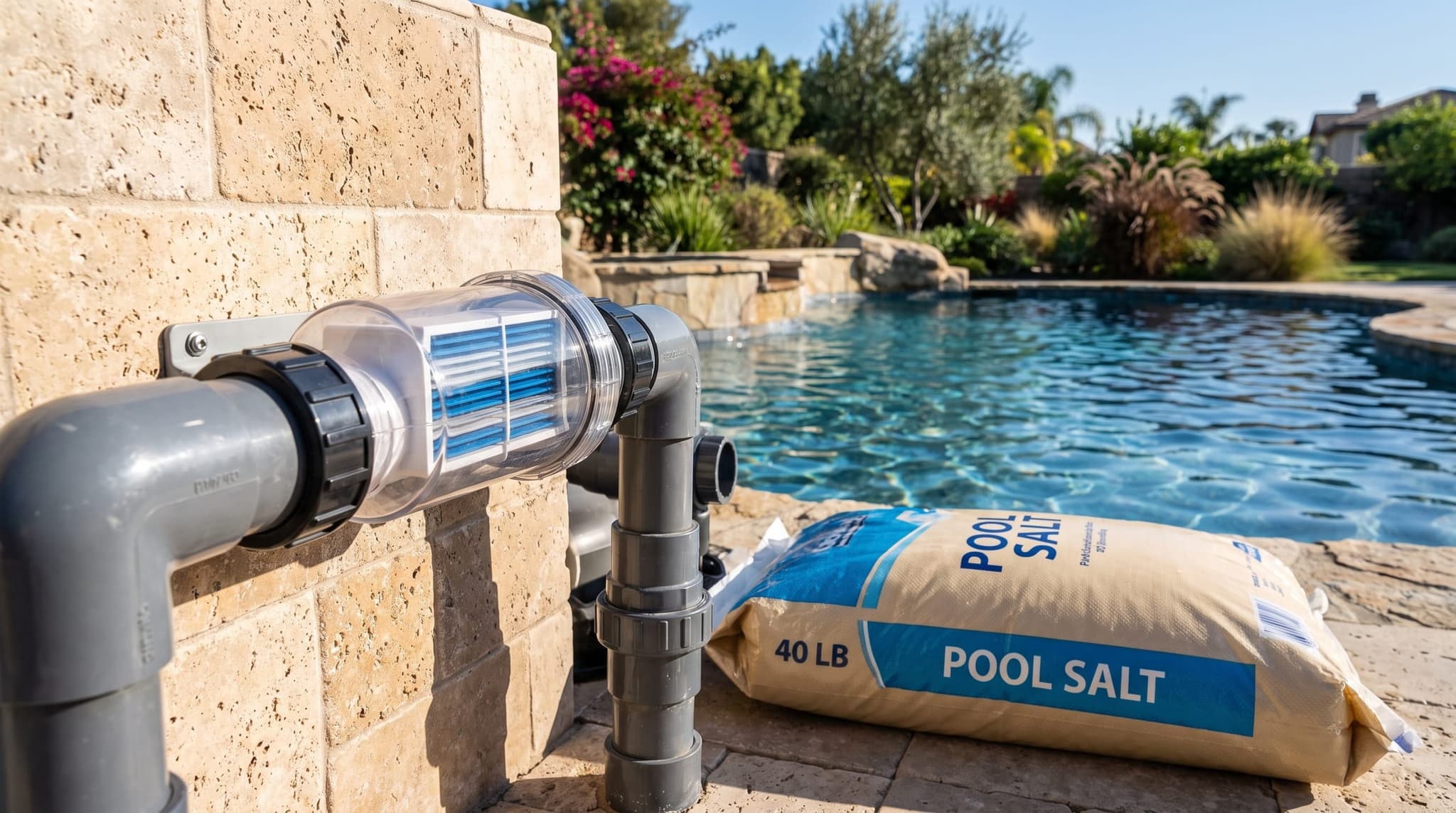
A salt cell is installed in the pool's plumbing line, typically between the filter and the heater. Dissolved salt in the pool water passes through the cell, where a small electrical current splits salt (NaCl) into sodium and chlorine gas. The chlorine dissolves back into the pool as hypochlorous acid, the same sanitizer that traditional chlorine produces. After sanitation, the process recombines back into salt. Self-renewing. You add salt once or twice a year; the cell does the rest.
Specifying a saltwater system correctly
Cell sizing to pool volume
Salt cells are rated for a maximum pool volume (15,000 / 25,000 / 40,000 gallons typical). Oversizing by one tier gives the cell an easier life and extends its replacement interval, we routinely spec one size up from the pool's actual volume.
Brand choice matters
We standardize on Pentair IntelliChlor, it pairs natively with the Pentair IntelliCenter automation we install on every pad. Same manufacturer for cell, pump, heater, and controller means cleaner integration and a single warranty path if something needs service.
Plumbing order
Salt cell after the filter, before the heater. Heater placement after the salt cell means heater internals see slightly elevated chlorine from the cell, we use heater materials rated for it.
Salt level maintenance
New saltwater pools are charged with salt at startup, typically 40–60 bags of pool salt depending on volume. After that, you top up once or twice a year as salt level drops from splashout, backwash, and rain dilution. Automation systems monitor and alert you.
Water balance still matters
Salt systems don't eliminate pool chemistry: pH, total alkalinity, cyanuric acid still need periodic adjustment. But it's a much simpler routine than juggling chlorine tablets and shock treatments week after week.
- New pool builds. Standard spec on almost every project we quote
- Families with skin-sensitive members, the water feels softer and has no chlorine smell
- Homeowners who want simpler ongoing maintenance
- Pool conversions from traditional chlorine. Straightforward retrofit during a remodel
Saltwater Pool Chlorination, frequently asked.
Is a saltwater pool actually salty?
Barely. Typical concentration is 2,700–3,500 ppm, about one-tenth of seawater (which runs ~35,000 ppm). Most people can't taste it. It feels softer on skin, doesn't sting eyes the way traditional chlorine can, and leaves no chemical smell.
How much does salt pool chlorination cost to run per year?
Ongoing cost is roughly $300–$400/year combined: salt top-ups plus electricity to run the cell. Compare to $600–$1,400/year in chlorine tablets, shock, and stabilizer for a traditional chlorine pool. The cell replacement every 4–7 years ($2,400–$2,600 installed) is the biggest scheduled cost.
Will saltwater damage my equipment or hardscape?
Modern pool equipment is rated for saltwater chlorination: heaters, pumps, filters, lighting all handle it fine. Hardscape concerns: limestone coping can etch slightly in salt-spray zones over 10+ years; travertine and natural stone are fine with periodic sealing. Bronze and unsealed metals corrode faster, we use stainless fixtures.
Can I convert my existing chlorine pool to saltwater?
Yes, and we do this routinely. Conversion runs $3,000–$4,500 depending on pool size and electrical work. We install the salt cell in the plumbing, charge the pool with salt, and tune the cell's output over the first week. After that it runs itself.