What pool automation actually controls
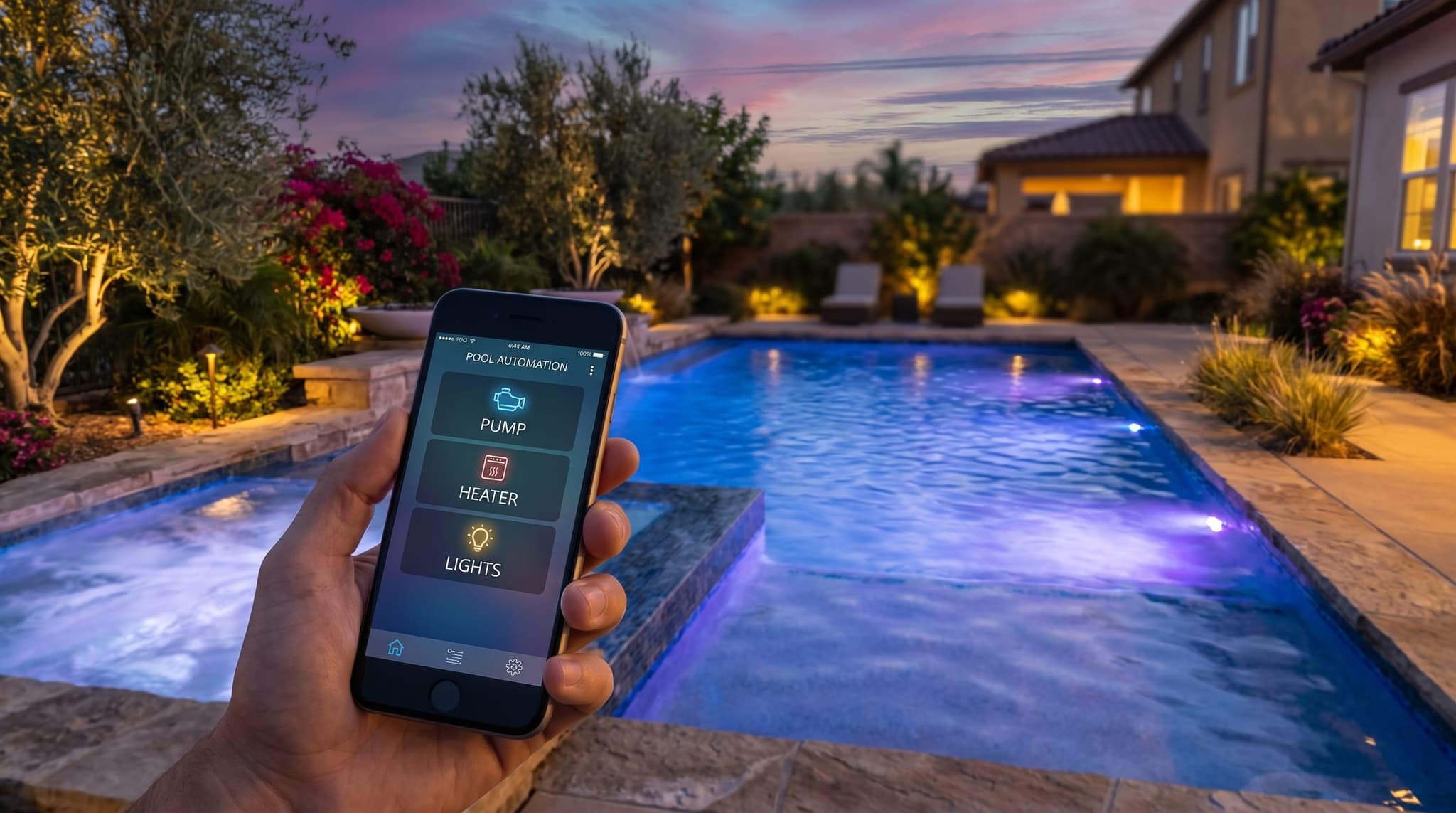
Pump speed and schedule (variable-speed control), heater on/off and setpoint, pool and spa lighting (including color-change LED), water features, fire features, chemistry automation (salt cell output, chlorine levels), sanitation systems, and integration with whole-home smart systems (Alexa, Google Home, Apple HomeKit in some configurations). All from a single app, all logged for diagnostics.
How we install Pentair IntelliCenter
Pentair IntelliCenter as the platform
Premium-tier automation, deepest feature set in the residential market. Pairs natively with Pentair IntelliFlo variable-speed pumps (industry benchmark), IntelliBrite 5G color-change LED, IntelliChlor salt generators, and MasterTemp gas heaters. We standardize on it because the integration across the pad is cleaner than mixing brands. No compatibility gaps, one app, one warranty path.
Why we don't mix brands
Multi-brand pads work, but every interface point is a potential warranty argument if something fails, pump manufacturer points at controller manufacturer points at chemistry-feeder manufacturer. A single-brand Pentair pad means one warranty contact, one app, and integration that the manufacturer actually supports. The small premium over a mixed-brand build pays back the first time something needs service.
Multi-body zoning
Pool, spa, water features, and fire features each live on their own valve and pump zone, coordinated through the IntelliCenter controller. Proper zoning during plumbing rough is what makes one-tap multi-feature control possible. It's an installation choice, not an app feature.
Home integration
Voice control through Alexa or Google Home for common commands ('turn on the pool lights'). Geofencing to pre-heat the spa when you leave work. HomeKit support is partial across the industry and we'll tell you what's realistic for your home's ecosystem.
Wi-Fi at the equipment pad
IntelliCenter connects via Wi-Fi for app control. If your home Wi-Fi doesn't reach the pad, we install an extender or run hardwired ethernet during construction. It's a small scope and meaningfully cheaper to do during the build than later.
- New pool builds, most homeowners find automation pays for itself in convenience and energy savings
- Multi-feature pools where coordinated control matters (lights + water features + fire)
- Homeowners who travel, remote diagnostics catch problems before you get home
- Smart-home households, it works with Alexa and Google Home for voice commands (HomeKit support is partial)
Pool Automation, frequently asked.
Why standardize on Pentair?
Pentair's residential ecosystem is the deepest in the industry: IntelliFlo variable-speed pumps, IntelliBrite color-change LED, IntelliChlor salt cells, MasterTemp gas heaters, and IntelliCenter automation all engineered to work as one platform. Standardizing the whole equipment pad on a single manufacturer means cleaner warranty paths, fewer integration gaps, and one accountable party if something needs service. We can install other platforms on request, but Pentair is what we recommend on every new build.
Can I automate an existing pool?
Yes. Retrofits cost more than build-time installs because we're usually upgrading the pump (to variable-speed), wiring the controller box, and integrating existing equipment that may not be automation-ready. Budget $5,000–$8,500 for most single-body retrofits; a full equipment-pad refresh with new pumps, automation, and lighting runs $8,000–$16,000.
Do I need Wi-Fi at the equipment pad?
Modern automation controllers connect via Wi-Fi for app control. If your home Wi-Fi doesn't reach the equipment pad, we install a Wi-Fi extender or a hardwired ethernet run to the pad during construction. It's a small scope and it's cheaper to do during the build than later.
What if the app or controller stops working?
Every automation controller has physical override controls at the equipment pad: you can always run pumps, heater, and lights manually from the pad. The app is a convenience layer on top, not a critical-path dependency. The controllers themselves are durable; we've rarely seen one fail under 10 years with proper power-surge protection.