The water features we build
Water features break into five categories by function and aesthetic: sheet-flow features (sheer descents), jet features (deck jets, scuppers, bubblers), falls (rock and formal waterfalls), spillovers (from raised spas), and grottos. Each has a different sound, visual footprint, and cost.
Features we build, in order of popularity
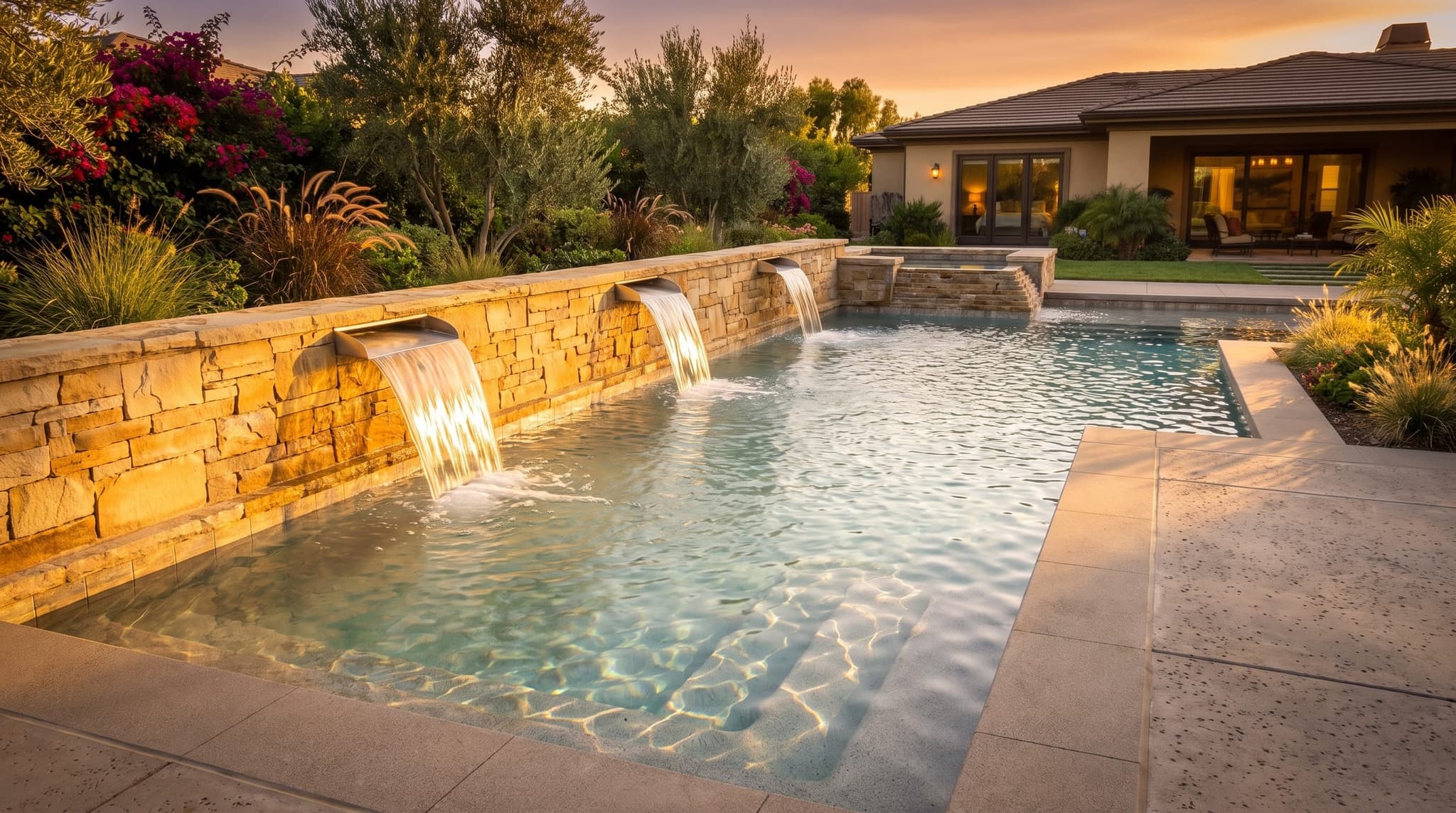
Sheer descent (sheet-flow spillover)
A rectangular slot cut into a raised wall; water flows out as a thin, perfectly flat sheet. The most modern, architectural look. Around $685 per sheer descent installed at the unit-price level; final cost depends on wall scope and plumbing tie-ins.
Scupper (urn-style)
A decorative spout, stone, copper, or metal, that discharges water from a raised wall into the pool. Classic Mediterranean look. $1,700–$2,500 per scupper.
Deck jets
Jets embedded in the deck that arc water across the pool. LED-illuminated versions turn it into a night feature. $750 and up per jet; most installs use 2–4.
Bubblers
Soft arcing jets embedded in tanning ledges or shallow sections. Quiet, visual, kid-safe. $650 and up per bubbler installed.
Rock waterfalls
Natural or cultured stone formations with water cascading over them. The loudest option. $6,000–$25,000 depending on scope; larger grotto versions go higher.
Spa spillovers
A raised spa overflows into the main pool via a sheer descent or sheet-flow lip. Almost every raised-spa build includes this. Around $500 beyond the spa cost itself.
- Pools visible from the kitchen or family room — the moving water reads through the window
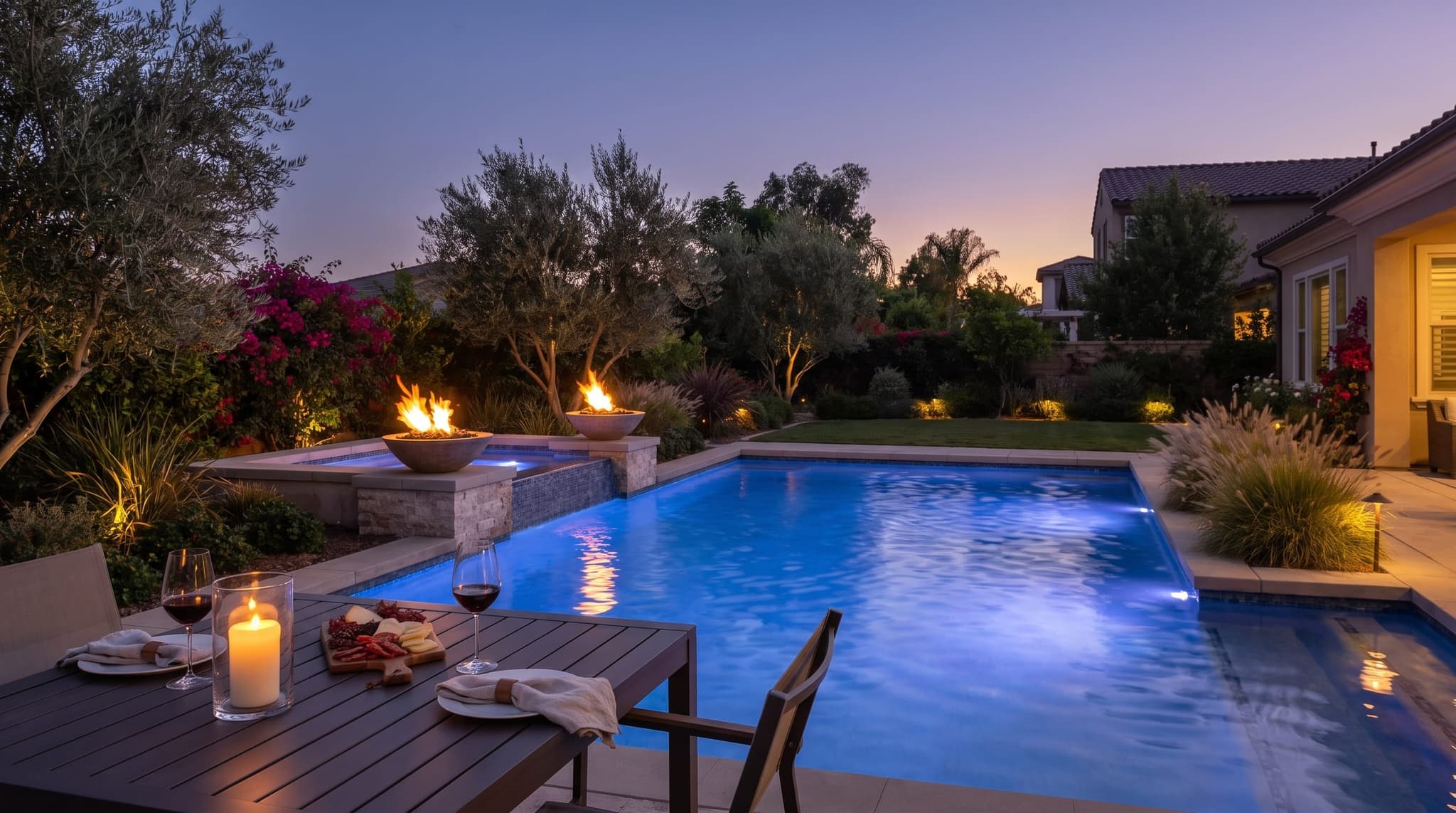
- Evening-use backyards — a sheer descent with LED behind it is a different feature after dark
- Any pool with a raised wall or raised spa, the architecture is already there
- Homeowners who want sound, rock waterfalls and deck jets are the loud options
Water Features, frequently asked.
Which pool water feature makes the most sound?
Rock waterfalls are the loudest, audible from across the yard. Sheer descents produce a gentle white-noise hiss. Scuppers produce a soft splash. Bubblers and deck jets are near-silent. Pick based on whether you want the pool to be a soundscape or stay quiet.
Can I add water features to an existing pool?
Yes, most of them. Bubblers and deck jets require cutting plumbing into the deck and shell and usually pair with a remodel. Sheer descents and scuppers require a raised wall, harder to retrofit but possible. Rock waterfalls can be added without major shell surgery if there's deck space for the structure.
Do water features run all the time?
No. They're plumbed on separate zones with their own valves, controlled by your automation system. Most homeowners run them during evening use only, keeps the noise down during the day and saves pump run time.
Do LED-lit water features look as good as the photos?
Better, actually. A photo never quite catches what the light looks like coming up through moving water. Budget for LED integration from the start, $200–$600 per feature for the light kit plus low-voltage wiring, rather than trying to add it later.